MBWeek 3 / 6 · Hips40 min
Hips and T-spine
| A | Cossack squat | 3 × 8 a side |
|---|---|---|
| B | Open books | 3 × 8 a side |
| C | Box breathing | 5:00 |
Coach’s note: in a heavy week, this is the session that keeps you lifting.
 Priya Natarajan, coach · 7 min read
Every session at Setwork starts with the same ten minutes. It’s on the board under A, before the first lift, and we don’t cut it when the session is tight. In a heavy week it matters more, not less.
A warm-up you know by heart is a test you run every day. If your hips are stiffer on Thursday than on Monday, you’ll feel it in the second movement, before there’s weight on the bar. That’s worth knowing.
There are two kinds of range. The first is how far a joint will go when something else moves it: a partner pushing your knee to your chest, gravity pulling you into a split. The second is how far you can take it yourself, with control, and come back. We call the first borrowed and the second owned.
Lifting only uses owned range. A squat goes as deep as you can control it, not as deep as you could be pushed. That’s why long static stretches before training don’t do much for us. They make a joint feel looser for a while, but they don’t teach you to hold a position under load.
The ten minutes are all owned range: slow, controlled, end to end, with a pause at the edge. You’re not trying to go further than yesterday. You’re checking you can still get where you need to be.
A long warm-up is easy to skip. Ten minutes is short enough that nobody argues with it and long enough to raise the body temperature, move every joint the session will use, and find anything that isn’t right.
It’s also the same every day, which matters more than the length. You learn what normal feels like. A movement that’s fine on Monday and tight on Thursday is telling you something about Tuesday and Wednesday.
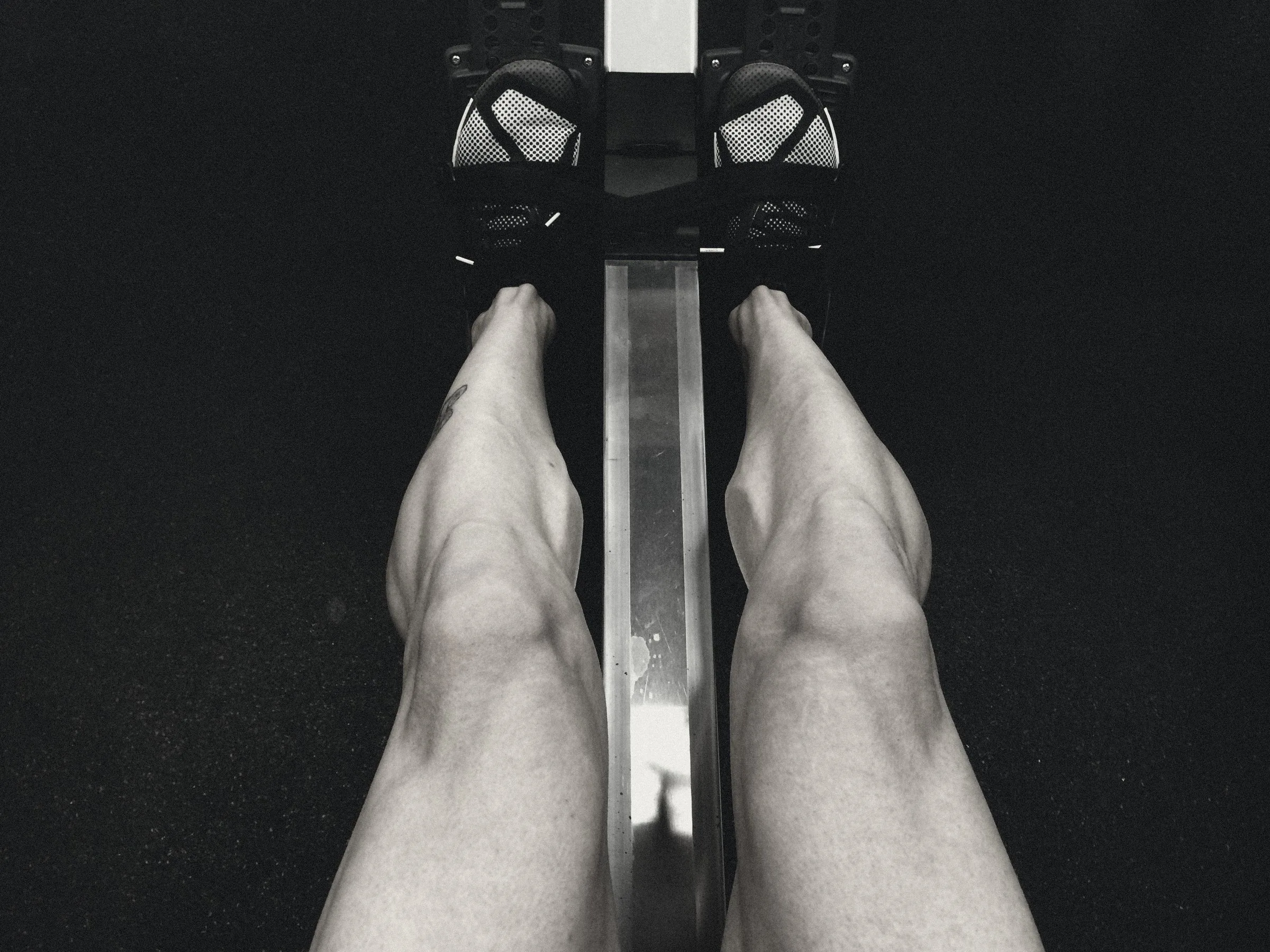
Two minutes of easy rowing or biking, just to get warm. Then three movements, eight a side, slowly:
Finish with two minutes of long exhales, lying on your back. It brings the breathing down before you ask it to work.
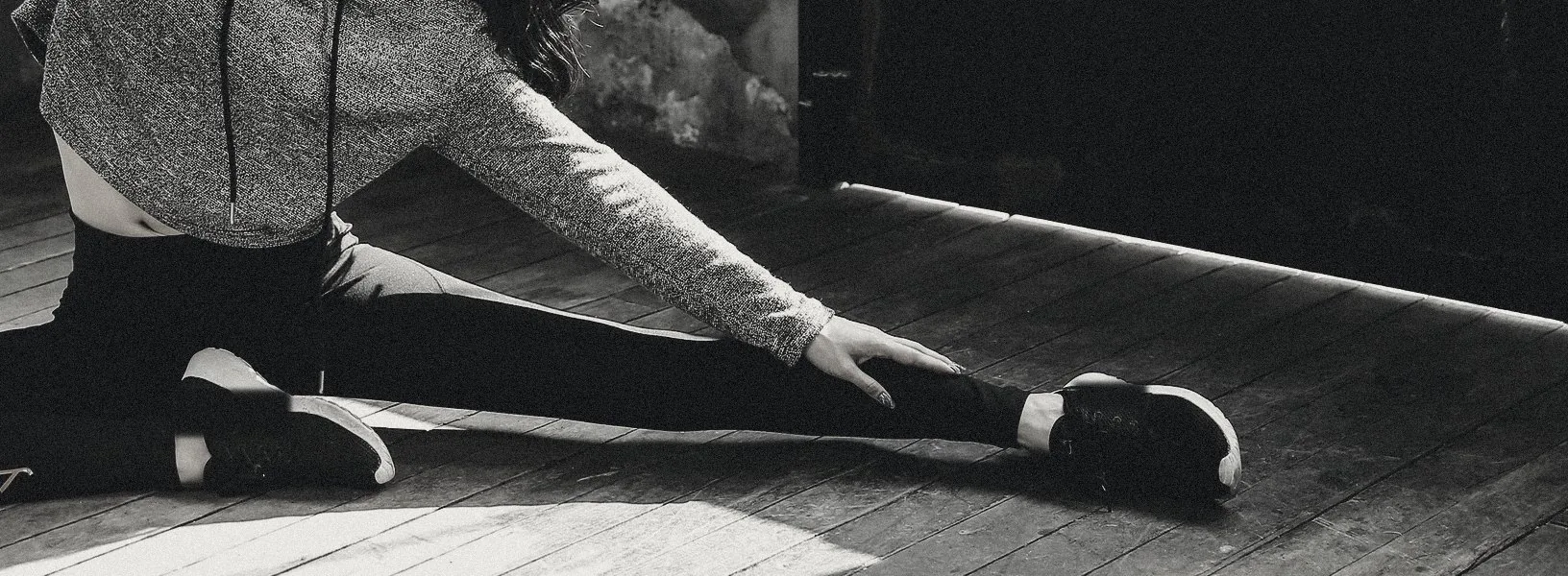
The Cossack squat is a hip and ankle test. Sink to one side with the other leg straight, heel down on the bent side, chest up. If the heel lifts, the ankle is short of range and your squat will tip forward later. If you can’t reach the bottom without your back rounding, the hips are the limit. Go as deep as you can hold for a breath, then switch.
Open books check the upper back. Lying on your side with your knees stacked at hip height, open the top arm across your body until it reaches the floor behind you, following it with your eyes. The knees stay together. If they lift, you’re twisting from the lower back, and that’s the part we want to keep still when the bar is overhead.
Thread the needle checks the same rotation on all fours, with your weight on one hand. Reach the free arm under your body, then up to the ceiling. It’s the position you need for a strong press and a clean row.
Eight slow reps a side. If one side is clearly worse, give it two more. If both are worse than usual, tell your coach before the first set, not after the last.
The last two minutes are the ones people want to skip, and the ones we watch for. Lie on your back with your feet on the floor, breathe in through the nose for four, out through the mouth for six or eight, and let the ribs drop on every exhale.
Long exhales slow the heart rate and settle the ribs into the position a good brace starts from. When you take a big breath before a heavy squat twenty minutes later, you’ll be taking it from a better place.
Move from the ribs, not the lower back.
The order runs from the floor up: warm the whole body on the machine, open the hips and ankles, then the upper back, then the breath. Each step uses the one before it. A rotated upper back is easier to find once the hips have stopped pulling on the pelvis, and the slow breathing at the end only works once everything else has stopped asking for attention.
Week 3 is the heaviest of the cycle. The bar is loaded closer to your limit, and the range you bring to the first rep is the range you have under load. Ten minutes is cheap insurance. On heavy days the coach watches the warm-up more closely, not less: a Cossack squat that stops short is a reason to adjust the first working set before it’s loaded.
In week 7 the warm-up stays exactly the same, even though the session is lighter. That’s deliberate. The deload is when the body catches up on the work of the cycle, and it’s the best week to notice which side is tighter, which joint is still sore, and what to bring up with your coach before week 1 starts again.
Some people need more. A desk job, an old injury, a sport that loads one side. For them the ten minutes is a floor, not a ceiling.
That’s what the Mobility programme is for: forty minutes on The Lane with Priya, built on the same movements and the same idea of owned range, taken further. Two sessions a week alongside Strength or Hybrid is enough for most people to feel the difference within a cycle, in the warm-up first and on the bar later.
| A | Cossack squat | 3 × 8 a side |
|---|---|---|
| B | Open books | 3 × 8 a side |
| C | Box breathing | 5:00 |
Coach’s note: in a heavy week, this is the session that keeps you lifting.
Rushing. Eight reps in thirty seconds is a different exercise. Each rep should take about four seconds out and four back, with a breath at the end of the range. If the ten minutes feel short, you’re probably going too fast.
Chasing depth. The goal isn’t to go further than the person next to you, or further than yesterday. It’s to reach the range you own and feel how it is today. Forcing an extra inch turns a check into a strain.
Holding your breath. Most people stop breathing at the hardest point of a stretch. Breathe out as you reach the end of the range instead. The muscles let go on an exhale, not while you’re bracing against them.
Skipping it when you’re late. If you arrive five minutes into the session, do the warm-up anyway and join the first set a little later. Your coach would rather you start one set behind than start cold.
The ten minutes need no equipment and about two square yards of floor. On days you don’t train, doing them once is enough to keep the habit and keep the range. Do them after a long day at a desk, or before a run, or first thing in the morning, which is when most people are at their stiffest.
Do them the same way you do them here: the same order, the same reps, the same slow breathing at the end. Then you’ll notice the difference on the days you skip, and so will your first set the next time you’re on The Floor.
Range rarely improves in a way you can see in a mirror. It shows up elsewhere. Your squat sits deeper without the heels lifting. Your press stays straight overhead without the lower back arching. The first rep of a heavy set feels like the fifth rep of a light one, because you started in the right place.
The log helps here too. Your coach notes the depth of your Cossack squat and how far your open book reaches at the start of each cycle. Over a year those notes tell a quieter story than your lifts, but it’s the one that keeps the lifts going up.
If you’re new, your Baseline includes the same three movements, and your coach writes down where each one ends for you. That’s your starting point, not a score. Bring the numbers to your first session and do the ten minutes with the coach watching once. After that, they’re yours: the same order, the same pace, every session, whatever the board says comes next. It’s the shortest block on the board and the one that makes the rest of it possible.