ENWeek 3 / 6 · Intervals45 min
One on, one off
| A | Air bike | 10 × 1:00 on, 1:00 off @ 85% |
|---|---|---|
| B | Row | 4 × 500 m @ race split |
| C | Ski erg | 5:00 easy |
Coach’s note: the last two rounds are the session. Pace the first eight for them.
 Theo Lindqvist, coach · 5 min read
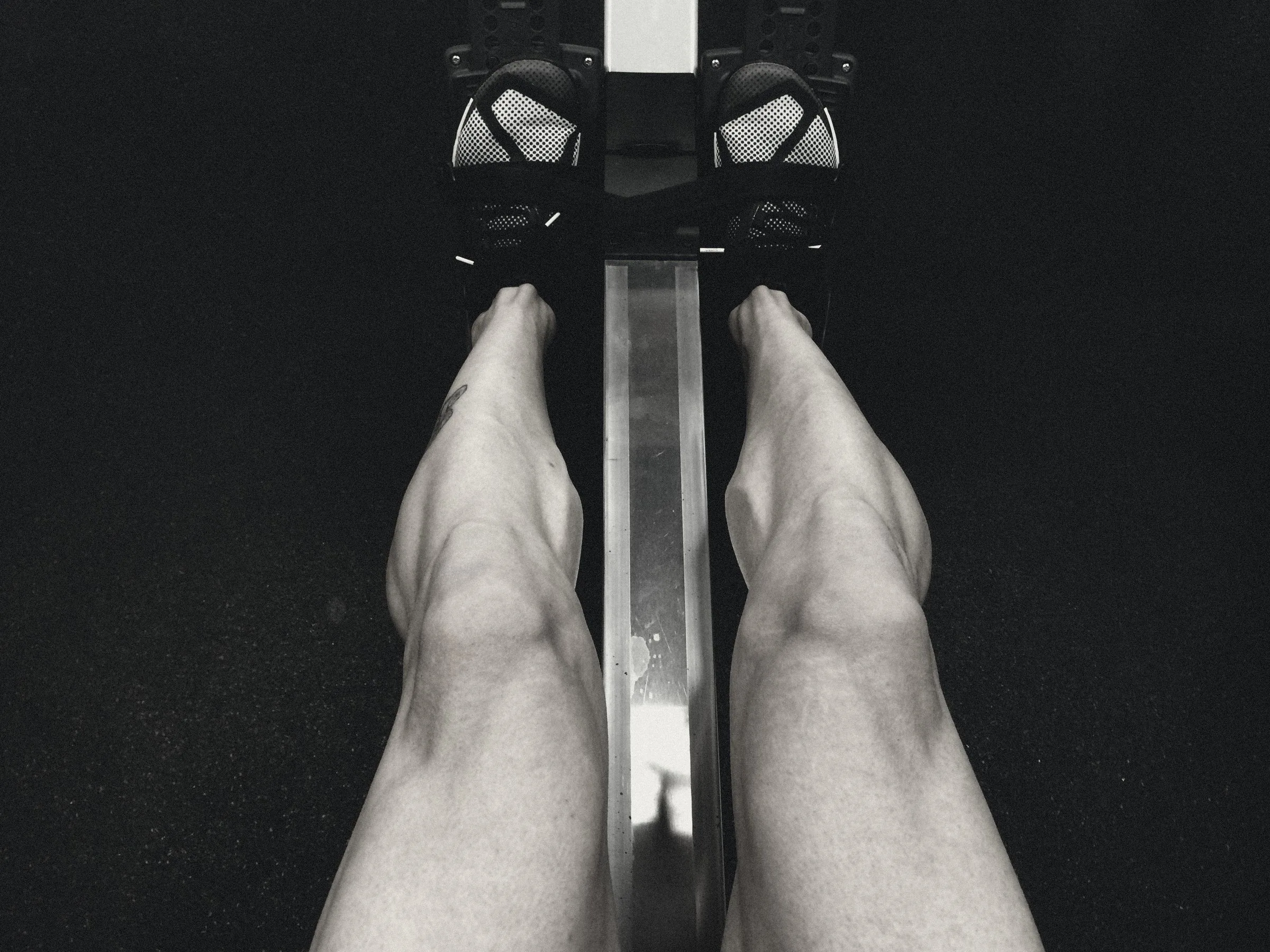
Watch the first ten strokes of any 500 m test. The split drops to a number nobody in the room can hold, and the monitor says so by stroke thirty. At 300 metres the legs go, the split climbs, and the last 200 take longer than the first 300.
The fix isn’t fitness. It’s a number, chosen before you sit down.
Your Baseline ends with a 2,000 m row. We take your average split from it and give you a target for each Engine session: a few seconds slower than your test on a threshold day, close to it on an interval day. It’s on the board next to your name.
The rower shows a lot of numbers. The one that matters is the split: how long it would take to row 500 metres at the pace you’re rowing right now. It updates every stroke. Pull harder and it drops; ease off and it climbs.
That makes it the most honest number in the Engine Room. It doesn’t care how the last stroke felt. It tells you what it was worth.
It also makes it easy to lie to yourself in the first minute. Fresh legs can hold a split for twenty strokes that they can’t hold for two hundred. The monitor will happily show you a number you have no business rowing yet.
Start too fast and you build up fatigue early, while the body is still switching from walking to working. That fatigue doesn’t go anywhere. It sits in the legs and arrives at 300 metres, right when you need them for the push to the line.
Compare two rowers with the same fitness. One goes out four seconds under target, the other sits on it. At 250 metres the fast starter is ahead. At 400, they’re level. At the line, the even rower has finished a few seconds clear, and felt better doing it. Every second you bank early, you pay back with interest late.
Even pacing isn’t timid. It’s the fastest way through the distance for almost everyone who isn’t racing for a medal.
Take three strokes to get the flywheel moving, then settle onto the number. If the monitor says faster than your split, you’re borrowing from the last 200. Ease the drive, not the rate.
At 250 m, check in. If you’re on the number and it feels hard, that’s the session working. If you’re on it and it feels easy, you get to decide in the last 150, not in the first 50.
Hold the split. Don’t chase it.
Two things set your split: how hard each stroke is and how many strokes you take a minute. Most people reach for rate when they want to go faster. It’s the wrong lever.
Our Engine sessions give a rate as well as a split: usually 24 to 28 strokes a minute for intervals, 20 to 22 for longer pieces. Hold the rate, and if the split is slow, push harder with the legs on each stroke. A fast rate with weak strokes looks busy and goes nowhere. A steady rate with a strong drive is what holds a split.
The sequence for every stroke is the same: legs, then body, then arms on the drive; arms, then body, then legs on the way back. Rush the recovery and the rate climbs without anything to show for it.
Most Engine sessions aren’t a single 500. They’re pieces: ten one-minute efforts with a minute off, or four 500s with three minutes between. The rule is the same in each one. The first piece should feel almost too easy. The last should feel like the hardest work you can repeat.
If your last interval is much slower than your first, the first was too fast. The log shows it plainly: ten splits in a column, and a good session reads like a flat line. A session that starts at 1:52 and ends at 2:04 isn’t a hard session. It’s a badly paced one.
Theo writes the target next to your name on the board before the session starts. If you want to change it, change it before the first stroke, not during the third interval.
| A | Air bike | 10 × 1:00 on, 1:00 off @ 85% |
|---|---|---|
| B | Row | 4 × 500 m @ race split |
| C | Ski erg | 5:00 easy |
Coach’s note: the last two rounds are the session. Pace the first eight for them.
Some days it won’t. You sit down, take your three strokes, and the number that was easy last week feels heavy. That’s information, not failure.
Hold the rate and let the split drift a second or two. If it drifts more than that, stop chasing it and finish the session at the pace you can repeat. Note it in the log. Two or three of those in a row and the coach will look at the rest of your week: sleep, other sessions, what you’re carrying in.
Your split isn’t fixed for the year. It moves with the cycle, the same way loads do on The Floor.
Week 1 is long, easy pieces, well slower than your Baseline split, so the work is about rhythm. Week 2 brings four-minute pieces at threshold. Week 3 is ten one-minute efforts, one on, one off. Week 4 holds the week 2 split for longer. Week 5 is short and hard, with full rest. Week 6 is the test: the same 2,000 m row as your Baseline, written next to the first number you ever rowed here.
If a session goes badly, the target doesn’t drop the next week. It waits until the log says you’re ready. A target you can hold for every piece is worth more than one you can hold for three, then lose for the rest of the session.
Six weeks of held splits looks boring on paper: the same number, session after session. Then week 6 comes, and the 2k is faster than the Baseline. That’s the point.